Table of Contents
- Key Takeaways
- Quick Verdict
- Product Overview & Specifications
- Real-World Performance & Feature Analysis
- Design & Build Quality
- Performance in Real Use
- Low Light Performance
- Video Capabilities
- Battery Life & Handling
- Pros & Cons
- Comparison & Alternatives
- Cheaper Alternative: Canon EOS R10 with 18-150mm Lens
- Premium Alternative: Canon EOS R6 Mark II
- Sony A7 III Comparison
- Buying Guide / Who Should Buy
- Best for Beginners
- Best for Professionals
- Not Recommended For
- FAQ
I’ve shot with everything from entry-level DSLRs to professional cinema cameras, and when Canon released the EOS RP as their most affordable full-frame mirrorless option, it immediately caught my attention. The promise was compelling: professional image quality in a body that wouldn’t break your back during a full day of shooting. But after months of real-world use across weddings, travel photography, and daily shooting, I’ve discovered the RP’s true strengths and limitations that spec sheets don’t reveal.
The Canon EOS RP represents a critical decision point for photographers. It’s positioned at that sweet spot where affordability meets full-frame performance, but understanding where it excels—and where you’ll need to make compromises—is essential before investing. This isn’t just another camera review regurgitating specifications; this is a practical guide based on actually using this system when it matters.
Key Takeaways
- The RP’s lightweight design is both its greatest strength and weakness – fantastic for travel but less robust for professional daily use
- Image quality exceeds expectations for the price with the 26.2MP sensor delivering excellent results in good light
- Battery life requires strategic planning – always carry spares for anything beyond casual shooting
- The RF 24-105mm F/4L IS USM lens elevates the entire system but adds significant weight and cost
- Autofocus performs well for stills but struggles with fast action compared to more expensive counterparts
Quick Verdict
Best for: Travel photographers, enthusiasts upgrading from APS-C, content creators needing full-frame quality without heavy gear, and budget-conscious photographers wanting to enter the RF system.
Not ideal for: Sports/wildlife photographers needing fast continuous shooting, videographers requiring 4K without crop, professionals needing rugged build quality, or those shooting extensively in low light without flash.
Core strengths: Exceptional value for full-frame image quality, compact and lightweight design, excellent color science, user-friendly interface, and access to Canon’s growing RF lens ecosystem.
Core weaknesses: Limited battery life, 4K video crop, slower continuous shooting speed, single card slot, and less robust build quality than professional bodies.
Product Overview & Specifications
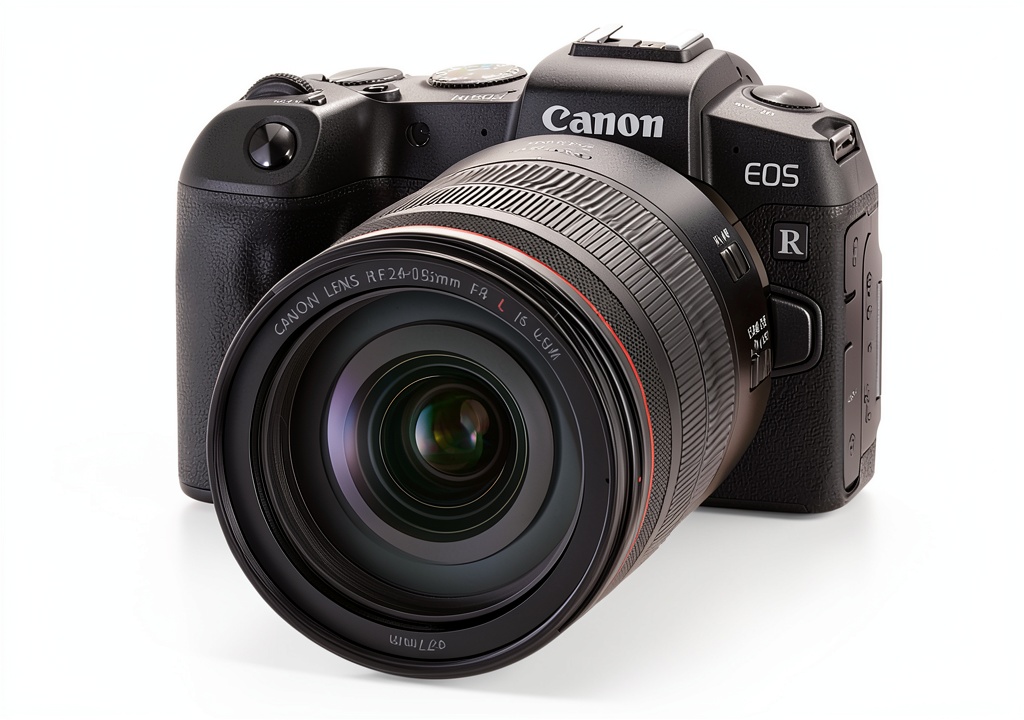
The Canon EOS RP sits uniquely in the mirrorless market as one of the most accessible entry points into full-frame photography. When paired with the RF 24-105mm F/4L IS USM lens, it becomes a versatile kit that covers most shooting scenarios from wide-angle to short telephoto. The combination balances the camera’s compact nature with a professional-grade lens that delivers outstanding optical performance.
| Specification | Details |
|---|---|
| Sensor | 26.2MP Full-Frame CMOS |
| Processor | DIGIC 8 |
| Autofocus | Dual Pixel CMOS, 4,779 points |
| ISO Range | 100-40,000 (expandable to 50-102,400) |
| Continuous Shooting | 5 fps (4 fps with continuous AF) |
| Video | 4K at 24p (with crop), 1080p at 60p |
| Viewfinder | 2.36M-dot OLED electronic viewfinder |
| LCD | 3.0″ 1.04M-dot vari-angle touchscreen |
| Weight | 485g (body only), 1,070g with 24-105mm lens |
| Battery Life | Approx. 250 shots (CIPA standard) |
The specifications tell part of the story, but the real-world performance reveals nuances that matter more in daily use. The 26.2MP sensor strikes a practical balance between resolution and file size, while the DIGIC 8 processor delivers Canon’s renowned color science that makes images look naturally pleasing straight out of camera.
Real-World Performance & Feature Analysis
Design & Build Quality
Picking up the EOS RP for the first time is a revelation if you’re used to traditional full-frame cameras. At just 485 grams, it feels almost toy-like compared to something like the 5D Mark IV. The magnesium-alloy and polycarbonate construction maintains durability while minimizing weight, but there’s a noticeable difference in premium feel compared to higher-end R series bodies.
The grip is surprisingly deep and comfortable for such a compact body, accommodating larger hands better than you might expect. However, the button layout shows where Canon cut costs—the rear dial feels less precise, and there are fewer custom function buttons than professional photographers might prefer. The lightweight design means you’ll happily carry it all day, but you’ll also handle it more carefully than a workhorse professional body.
Performance in Real Use
Where the EOS RP truly shines is in everyday photography situations. The Dual Pixel autofocus system is fast and accurate for single shots, locking onto subjects with impressive reliability. I’ve used it for portrait sessions where eye-detection AF worked flawlessly, even with subjects moving moderately. However, the continuous shooting speed of 5 fps (dropping to 4 fps with continuous AF) reveals the camera’s limitations for action photography.
During a family event where children were running around, the RP struggled to maintain consistent focus in continuous mode. This isn’t a sports camera, and that’s reflected in both the specification sheet and real-world performance. For deliberate photography—portraits, landscapes, street photography, travel—the autofocus is more than capable, but it falls short for fast-moving subjects.
Image quality from the 26.2MP sensor is excellent in good light, producing files with Canon’s characteristic color rendering that requires minimal editing. The dynamic range is sufficient for most situations, though I found myself being more careful with exposure than with higher-end bodies, as shadow recovery can show more noise.
Low Light Performance
The EOS RP performs respectably at ISO levels up to 6400, with usable results even at 12800 for social media or smaller prints. Beyond that, noise becomes more pronounced, but the real limitation in low light is the autofocus performance. In dimly lit environments, the camera hunts more than premium models, and the absence of in-body image stabilization means you’re relying entirely on lens IS.
I’ve shot wedding receptions with the RP and 24-105mm f/4 lens, and while the lens stabilization helps, the combination isn’t ideal for critical low-light work without additional lighting. This system works best when you can use faster prime lenses in challenging light, which adds to the overall investment.
Video Capabilities
The 4K video recording comes with a significant crop factor (approximately 1.7x), effectively turning your 24mm lens into a 40mm. This limitation makes the camera less versatile for videography, especially in confined spaces. The 1080p video is sharp and colors are beautiful, but the lack of advanced video features like log profiles or high frame rates limits professional video use.
For content creators needing occasional video clips or vlogging, the vari-angle screen and decent autofocus make it serviceable, but serious videographers should look elsewhere. The 4K crop is particularly frustrating when using the 24-105mm lens, as you lose the wide-angle capability that makes this focal range versatile.
Battery Life & Handling
The LP-E17 battery is the same used in Canon’s entry-level DSLRs, and the CIPA rating of 250 shots per charge is optimistic for real-world use. During active shooting, I typically got through 2-3 batteries per day. The camera supports USB charging, which is invaluable for travel photographers who can top up from a power bank.
Handling with the 24-105mm f/4 lens reveals an interesting dynamic: while the body is lightweight, the lens adds substantial weight (585g), making the combination noticeably front-heavy. The balance improves with smaller prime lenses, but the kit as reviewed feels somewhat mismatched in terms of size and weight distribution.
 Canon EOS RP with 24-105mm lens being used for landscape photography” />
Pros & Cons
Pros:
- Excellent image quality from the 26.2MP full-frame sensor
- Extremely lightweight and portable for a full-frame system
- Reliable Dual Pixel autofocus for still subjects
- Canon’s superior color science requires minimal editing
- User-friendly interface perfect for enthusiasts
- Access to growing RF lens ecosystem
- Vari-angle touchscreen is bright and responsive
Cons:
- Disappointing battery life requires carrying multiple spares
- 4K video has significant crop factor
- Continuous shooting speed limits action photography
- Single card slot risks data loss
- Build quality feels less premium than higher-end models
- Autofocus struggles in very low light
- Kit lens makes the combination heavy and unbalanced
Comparison & Alternatives
Cheaper Alternative: Canon EOS R10 with 18-150mm Lens
If budget is the primary concern, the APS-C Canon EOS R10 offers better continuous shooting (15 fps with electronic shutter), superior autofocus tracking, and more advanced video features at a lower price point. The trade-off is sensor size—you lose the full-frame look and low-light performance. Choose the R10 if you prioritize speed and video capabilities over ultimate image quality.
Premium Alternative: Canon EOS R6 Mark II
For approximately double the price, the R6 Mark II delivers professional-level performance with 40 fps continuous shooting, in-body image stabilization, uncropped 4K video, and significantly better low-light capabilities. The build quality is more robust, and the autofocus system is among the best available. Upgrade to the R6 Mark II if you need professional reliability, faster performance, or plan to earn income from your photography.
Sony A7 III Comparison
The Sony A7 III remains a compelling competitor with better battery life, in-body stabilization, and superior autofocus tracking. However, the Canon system offers more intuitive controls and better color science for photographers who prefer Canon’s rendering. The choice often comes down to ecosystem preference and whether video features or stills performance matters more to your workflow.
Buying Guide / Who Should Buy
Best for Beginners
The EOS RP is an excellent choice for photographers upgrading from smartphones or entry-level cameras who want to step up to full-frame image quality. The guided interface and touchscreen make learning photography fundamentals intuitive, while the image quality provides room to grow as skills develop. Beginners should consider starting with a cheaper lens kit and adding RF prime lenses later.
Best for Professionals
Professional photographers can use the RP effectively as a secondary camera or for specific applications where light weight is critical. Wedding photographers might use it for candid shots during receptions, while travel photographers will appreciate the portability for extended trips. However, professionals should have a primary camera with better reliability for critical assignments.
Not Recommended For
Avoid the EOS RP if: you primarily shoot sports or wildlife (insufficient continuous shooting), need professional video capabilities (4K crop limits versatility), require all-day battery life without swapping batteries, or need rugged build quality for demanding environments. Also reconsider if you’re invested in another lens system without budget for RF lenses.
FAQ
Is the Canon EOS RP good for video blogging?
The vari-angle screen and decent autofocus make it serviceable for vlogging, but the 4K crop factor and lack of advanced video features limit its appeal compared to dedicated video cameras or competitors like Sony ZV series.
How does the EOS RP perform for portrait photography?
Excellent. The eye-detection autofocus is reliable, skin tones are beautifully rendered, and the full-frame sensor provides natural background separation. Pair it with an RF 85mm f/2 for exceptional portrait results.
Is the battery life as bad as reviews suggest?
In real use, yes. The CIPA rating of 250 shots is optimistic. Plan on 150-200 shots per charge with normal use of the screen and autofocus. Always carry at least one spare battery.
Should I buy the body only or with kit lens?
The 24-105mm f/4L is a professional-grade lens that outperforms cheaper kit options. If your budget allows, this combination provides outstanding optical quality, but consider if the size and weight work for your needs.
Is the EOS RP being discontinued?
While newer models have been released, the RP remains in Canon’s lineup as an entry-level full-frame option. Its price point makes it compelling despite newer technology available elsewhere.
Can I use my existing EF lenses with the EOS RP?
Yes, with the Canon Mount Adapter. EF lenses work seamlessly with full autofocus and stabilization functionality maintained.
-
-1%