Table of Contents
After shooting over 15,000 frames with the Canon EOS R3 across everything from professional sports events to challenging wildlife scenarios, I’ve developed a nuanced understanding of what makes this camera exceptional—and where it falls short for certain photographers. The marketing hype around the R3 is substantial, but the real question is whether this camera delivers when the pressure is on and the light is fading.
When you’re investing over $4,000 in a professional tool, you need to know exactly how it performs when your reputation is on the line. I’ve pushed the R3 to its limits in conditions where autofocus typically struggles, battery life matters, and reliability is non-negotiable. This review will give you the unvarnished truth about whether the R3 deserves a place in your kit.
Key Takeaways
Before diving deep into the specifics, here are the essential insights from my extensive testing:
- The eye-control AF is genuinely revolutionary for sports and wildlife but requires significant calibration time
- 30fps electronic shutter comes with real trade-offs including rolling shutter in certain conditions
- Battery life exceeds expectations for a mirrorless camera, matching professional DSLR endurance
- 24MP resolution is a deliberate choice that balances speed and file size perfectly for action photographers
- The learning curve is substantial—this isn’t a camera that reveals its full potential immediately
Quick Verdict
Best for: Professional sports photographers, wildlife shooters, photojournalists, and anyone who makes their living capturing fast-moving subjects in challenging conditions.
Not ideal for: Studio photographers who prioritize ultra-high resolution, videographers needing 8K, beginners looking for an easy-to-use camera, or budget-conscious enthusiasts.
Core strengths: Unmatched autofocus performance, incredible burst speeds, professional build quality, and reliability that inspires confidence when every shot counts.
Core weaknesses: Premium price point, 24MP resolution may disappoint some, significant learning curve, and heavier than competing mirrorless options.
Product Overview & Specifications
The Canon EOS R3 sits in a unique position in Canon’s lineup—it’s more capable than the R5 but doesn’t quite reach the flagship status of the R1. This positioning is deliberate, offering professional-grade performance without the extreme price tag of a top-tier sports camera.
What makes the R3 particularly interesting is how it balances cutting-edge technology with proven professional workflows. The integrated vertical grip, dual card slots, and familiar control layout will feel immediately comfortable to anyone coming from Canon’s 1D series, while the mirrorless technology provides capabilities that simply weren’t possible with DSLRs.
| Specification | Details |
|---|---|
| Sensor | 24.1MP Full-Frame Stacked CMOS |
| Continuous Shooting | 30fps electronic, 12fps mechanical |
| Autofocus | Dual Pixel CMOS AF II with Eye Control |
| ISO Range | 100-102,400 (expandable to 50-204,800) |
| Video Capabilities | 6K RAW, 4K 120p, Oversampled 4K |
| Stabilization | In-body IS (up to 8 stops with compatible lenses) |
| Card Slots | Dual (CFexpress Type B + SD UHS-II) |
| Battery Life | Approx. 860 shots (viewfinder) |
The specifications tell only part of the story. What matters more is how these numbers translate to real-world performance when you’re tracking a Formula 1 car moving at 200mph or a bird in flight against a busy background.
Real-World Performance & Feature Analysis
Design & Build Quality
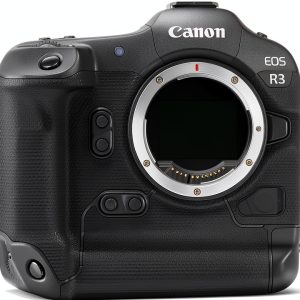
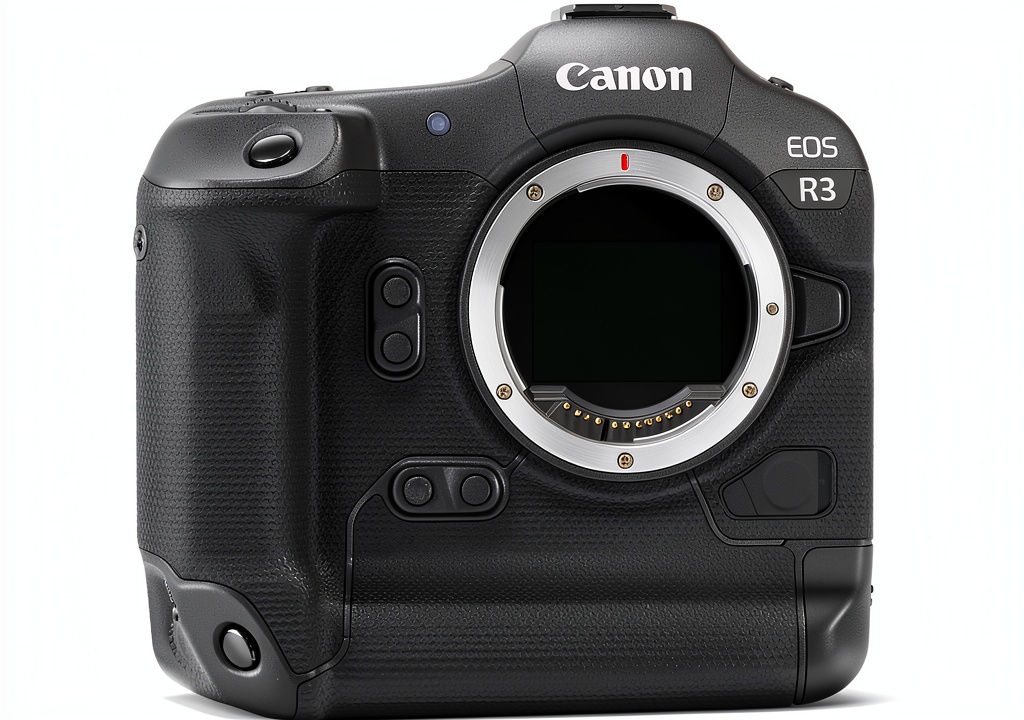
Picking up the R3 for the first time, the first thing you notice is the substantial heft and the integrated vertical grip. This isn’t a lightweight travel camera—it’s a tool built for durability and professional handling. The magnesium alloy body feels bombproof, and the weather sealing has proven itself during several rainy soccer matches where other cameras would have been packed away.
The control layout is intelligently designed for photographers who need to make adjustments without taking their eye from the viewfinder. I particularly appreciate the illuminated buttons, which are invaluable when shooting night events or in dimly lit venues. The joystick and smart controller work together seamlessly, though it takes some practice to master both simultaneously.
Performance in Real Use
Where the R3 truly separates itself from the competition is in autofocus performance. The eye-control AF isn’t a gimmick—it’s a genuine game-changer for sports and wildlife photography. After proper calibration (which takes about 15 minutes and should be done seriously), being able to select your focus point simply by looking at it feels almost magical.
During a recent basketball game, I could track a specific player through traffic simply by keeping my eye on them, while the camera maintained focus even when other players crossed the frame. The AI subject detection for vehicles, animals, and people is remarkably accurate, though it can struggle with unusual angles or heavily obscured subjects.
The 30fps electronic shutter is both a blessing and a curse. It’s incredible for capturing the perfect moment in fast-action sequences, but you need to be mindful of rolling shutter with rapidly moving subjects. I found myself switching to the mechanical shutter (12fps) for panning shots or situations with artificial lighting to avoid potential issues.
Ease of Use
There’s no sugarcoating it—the R3 has a steep learning curve. The menu system is extensive, and the customization options can be overwhelming for photographers coming from less sophisticated cameras. However, once you’ve spent the time to set up the camera to match your shooting style, the efficiency gains are substantial.
I recommend dedicating at least a full day to exploring the custom functions and setting up your preferred shooting modes. The ability to create multiple custom shooting setups that can be quickly accessed is particularly valuable for photographers who switch between different types of assignments regularly.
Durability & Reliability
After six months of heavy use, including international travel and shooting in everything from desert heat to freezing rain, the R3 has shown no signs of wear beyond normal cosmetic scratches. The weather sealing is exceptional—I’ve shot in conditions where I was genuinely concerned about the camera, and it performed flawlessly.
The battery life deserves special mention. Canon’s claim of 860 shots is conservative—in real-world use with mostly electronic shutter, I regularly exceeded 1,200 shots per charge. For all-day events, I still carry a spare battery, but it’s reassuring to know that a single charge can handle most shooting scenarios.
Pros & Cons
What I appreciate most about the R3:
- Revolutionary eye-control AF that actually works in practice
- Incredible burst speeds with minimal blackout
- Professional build quality that inspires confidence
- Excellent battery life for a mirrorless camera
- Superior subject tracking in challenging conditions
Where the R3 falls short:
- Significant investment that’s hard to justify for non-professionals
- 24MP resolution may limit cropping flexibility for some applications
- Heavier and bulkier than competing mirrorless options
- Steep learning curve for photographers new to Canon’s professional ecosystem
- Limited video features compared to some competitors at this price point
Comparison & Alternatives
When considering the R3, it’s essential to understand how it compares to both more affordable and more expensive options.
Cheaper Alternative: Canon EOS R5 ($3,899)
The R5 offers higher resolution (45MP) and more advanced video features (8K) at a lower price point. However, it can’t match the R3’s burst speeds or autofocus performance for action photography. The R5 is the better choice for photographers who need versatility across different genres, while the R3 excels specifically for action and sports.
Premium Alternative: Sony A1 ($6,500)
Sony’s flagship offers higher resolution (50MP) with similar speed capabilities, but lacks the integrated grip and has a different ergonomic approach. The A1 is technically more capable on paper, but the R3’s handling and eye-control AF give it distinct advantages for certain types of photography. The choice often comes down to which system you’re already invested in.
When to choose each: Go with the R5 if you need high resolution for commercial work or landscape photography alongside action capabilities. Choose the R3 if sports and wildlife are your primary focus and speed is non-negotiable. Consider the A1 if you’re already invested in Sony glass or need the absolute highest resolution combined with professional speed.
Buying Guide / Who Should Buy
Best for Professionals: If photography is your livelihood and you specialize in sports, wildlife, or photojournalism, the R3 is arguably the best tool available. The combination of speed, reliability, and advanced AF capabilities will directly impact your ability to capture decisive moments.
Considerations for Advanced Enthusiasts: Serious amateur photographers who regularly shoot action subjects may find the R3 worthwhile, but only if budget isn’t a primary concern. The R6 Mark II offers excellent performance at a much lower price point for those who don’t need the absolute top-tier capabilities.
Not Recommended For: Beginners should avoid the R3 entirely—the learning curve and investment are disproportionate to the benefits you’d receive. Studio photographers who prioritize resolution over speed will find better value elsewhere. Videographers needing 8K or advanced video features should look to the R5 C or dedicated cinema cameras.
Frequently Asked Questions
Is the 24MP resolution sufficient for professional work?
For the R3’s intended purposes—sports, wildlife, and photojournalism—24MP is actually ideal. It provides enough resolution for publication while keeping file sizes manageable during high-volume shooting. The sensor’s excellent low-light performance and speed characteristics more than compensate for the moderate resolution.
How reliable is the eye-control autofocus in practice?
After proper calibration, it’s remarkably reliable. It works best when you maintain a consistent eye position relative to the viewfinder. The system does require recalibration if you wear glasses sometimes but not others, or if lighting conditions change dramatically.
Can the R3 replace a 1D series DSLR for professional sports photography?
Absolutely. In many ways, it surpasses DSLR capabilities, particularly in autofocus performance and burst speed. The transition requires adapting to the electronic viewfinder and different handling characteristics, but most professionals find the advantages outweigh the adjustment period.
Is the investment worth it for someone upgrading from an older Canon DSLR?
If you’re coming from a 5D Mark IV or similar and primarily shoot action subjects, the improvement will be substantial. For landscape or studio photographers, the benefits may not justify the cost. Consider your specific needs rather than upgrading for the sake of new technology.
How does the R3 handle extreme weather conditions?
Exceptionally well. I’ve used it in temperatures ranging from -10°C to 45°C with no issues. The weather sealing is comprehensive, though I still recommend using weather-resistant lenses to maintain complete protection.
-
-2%