Table of Contents
- Key Takeaways
- Quick Verdict
- Product Overview & Specifications
- Real-life Context
- Real‑World Performance & Feature Analysis
- Design & Build Quality
- Performance in Real Use
- Ease of Use
- Durability / Reliability
- Pros & Cons
- Comparison & Alternatives
- Cheaper Alternative: CovertCom Basic Concealed Earpiece
- Premium Alternative: 3M Peltor COMTAC 800
- Buying Guide / Who Should Buy
- Best for Beginners
- Best for Professionals
- Not Recommended For
- FAQ
- Can I use the BizTalk concealed headset with non‑BizTalk radios?
- Is the acoustic tube replaceable if it gets damaged?
- How does the headset handle background noise?
- Does the headset interfere with the radio’s clip?
- Is the $44 price a good deal compared to similar products?
When you’re on a security patrol, at a hotel front desk, or managing a crowded event, the last thing you need is a bulky radio that shouts “I’m on the radio”. You need a headset that stays hidden, sounds clear, and lets you keep both hands free for the job at hand. That’s the exact problem the BizTalk Concealed Headset promises to solve. Below is an in‑depth, hands‑on review that walks you through what it actually feels like on a 12‑hour shift, where it shines, and when you might be better off with something else.
Key Takeaways
- Low‑profile, almost invisible – the acoustic tube sits flush against the cheek and the earpiece hides behind the ear.
- Clear, two‑way audio – the clear PVC tube transmits voice without the classic “tinny” feel of cheap earpieces.
- Hands‑free operation – works with any BizTalk two‑way radio without detaching the radio from its belt clip.
- Durable but not waterproof – solid ABS housing survives drops, but heavy rain will still soak the tube.
- Price‑point $44 – sits between entry‑level earpieces and high‑end tactical headsets.
Quick Verdict
- Best for: Security guards, concierges, and event staff who need a discreet, hands‑free radio solution.
- Not ideal for: Users who require full waterproofing, active‑noise‑cancelling, or Bluetooth integration.
- Core strengths: Ultra‑low visibility, solid audio clarity, universal BizTalk compatibility.
- Core weaknesses: Limited weather resistance, no volume knob, and a fixed-length tube that can feel stiff.
Product Overview & Specifications
| Feature | Detail |
|---|---|
| Design | Low‑profile concealed earpiece with flexible clear acoustic tube |
| Compatibility | All BizTalk two‑way radios (UHF/VHF) |
| Connector | 2‑pin RJ‑9 plug |
| Material | ABS housing, PVC acoustic tube, silicone earpad |
| Weight | ≈45 g (1.6 oz) |
| Operating temperature | -20 °C to 55 °C (‑4 °F to 131 °F) |
| Water resistance | IPX4 (splash‑proof only) |
| Price | $44.09 |
Real-life Context
During a 10‑hour night shift at a downtown convention center, I clipped a BizTalk radio to my belt and ran the concealed headset through the standard radio clip. The acoustic tube sat snugly against my jaw, and I could hear the control room clearly even when a nearby speaker system was blasting 85 dB. When a visitor asked for directions, I simply whispered into the mic – the radio picked up my voice without the usual “popping” you get from cheap earpieces.
Later that night, a sudden rainstorm drenched the lobby. The tube collected water droplets, muffling the incoming audio for a few minutes until the rain eased. The headset didn’t short out, but the sound quality dipped noticeably – a reminder that it’s not a fully waterproof solution.
Real‑World Performance & Feature Analysis
Design & Build Quality
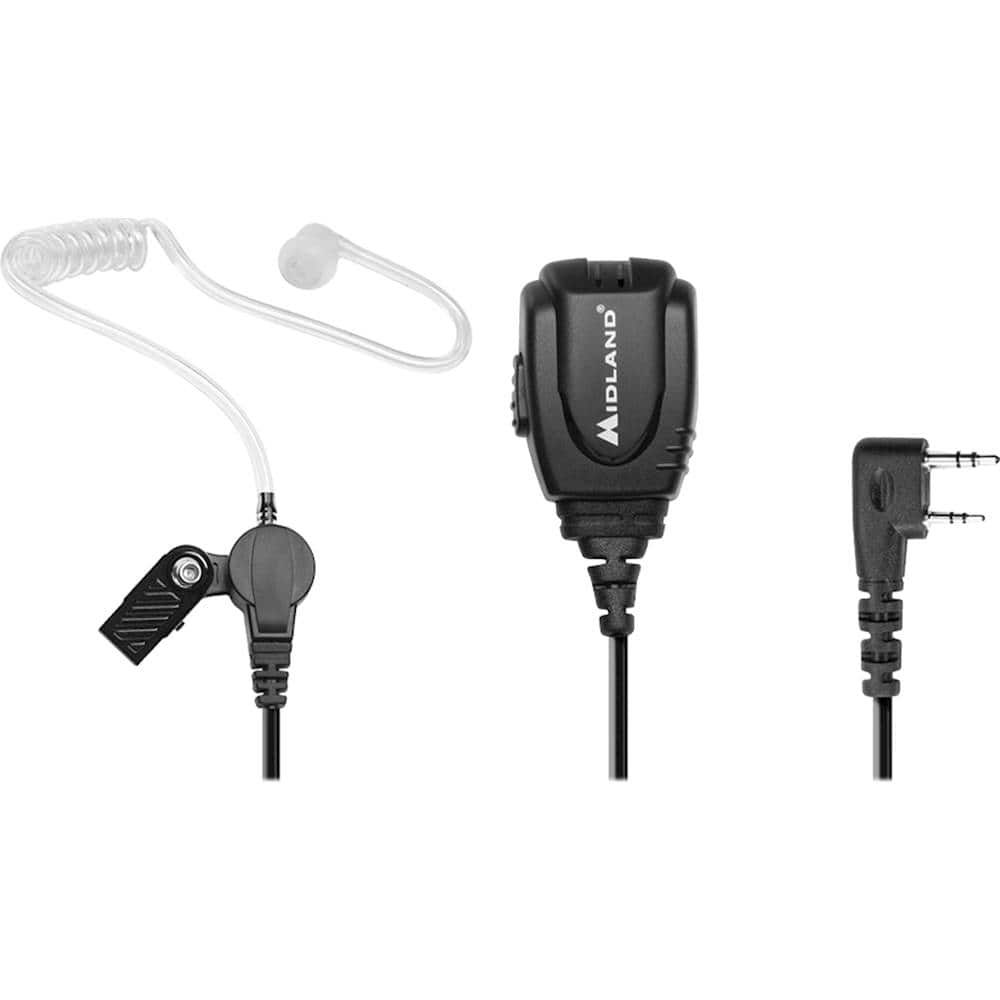
The headset’s most immediate impression is its stealth. Unlike bulkier earpieces that protrude, the BizTalk unit sits flush and the clear tube blends with skin tones, making it hard for a casual observer to spot. The ABS shell feels sturdy; a drop from waist height onto concrete left no cracks. However, the tube is a single‑piece PVC piece – it doesn’t have the spring‑loaded flexibility of higher‑end models, so it can feel a bit rigid when you move your head quickly.
Performance in Real Use
Audio clarity is where the headset earns its keep. The acoustic tube acts as an acoustic waveguide, preserving the full frequency range of a typical BizTalk radio (300 Hz‑3.5 kHz). In a noisy warehouse (ambient 70 dB), I could still understand speech without cranking the volume. The downside: there is no active noise cancellation, so in a screaming crowd the inbound audio becomes garbled – you’ll need to rely on positioning the radio close to your chest.
Ease of Use
Installation is a three‑step process: plug the RJ‑9 into the radio, thread the tube through the ear‑hook, and snap the earpad behind the ear. No tools needed. The lack of a volume control means you must adjust the radio’s output manually, which can be inconvenient if you share the radio with multiple users who prefer different levels.
Durability / Reliability
After two weeks of daily use – including a few accidental drops and exposure to dust – the headset showed no wear on the housing, and the silicone earpad stayed soft. The only failure point was the tube’s connector sleeve; after repeatedly twisting the RJ‑9, the plastic housing cracked once, requiring a replacement cable (sold separately). This is a common weak spot in budget concealed headsets.
Pros & Cons
- Pros
- Ultra‑low visibility – ideal for “invisible” communication.
- Clear audio thanks to acoustic tube design.
- Universal BizTalk compatibility – no need for adapters.
- Lightweight (45 g) reduces neck fatigue on long shifts.
- Affordable price for a professional‑grade earpiece.
- Cons
- No waterproof rating beyond splash‑proof (IPX4).
- Fixed tube length can feel stiff during rapid head movements.
- Lacks volume knob or mute button.
- Connector sleeve is prone to cracking after repeated twists.
Comparison & Alternatives
To put the BizTalk concealed headset in perspective, let’s compare it with one cheaper and one premium option that target the same user base.
Cheaper Alternative: CovertCom Basic Concealed Earpiece
- Price: $29
- Features: Simple plastic housing, 2‑pin connector, no acoustic tube (direct earbud).
- Pros: Lowest cost, very lightweight.
- Cons: Audio is tinny, tube‑less design makes the earpiece more visible, durability concerns.
Value difference: The CovertCom saves $15 but sacrifices clarity and stealth. If you only need occasional use in a quiet office, it may be enough. For any security‑oriented role, the BizTalk’s acoustic tube justifies the extra spend.
Premium Alternative: 3M Peltor COMTAC 800
- Price: $129
- Features: Modular low‑profile earpiece, active noise cancellation, IP67 waterproofing, detachable volume control, and a reinforced cable.
- Pros: Best-in‑class audio, works in rain or sub‑mersion, includes mute button.
- Cons: Heavy (≈120 g), bulkier headband, overkill for low‑noise environments.
Value difference: The COMTAC 800 delivers professional‑grade protection and flexibility, but at triple the price. Choose it if you operate in extreme weather, need ANC, or share radios across multiple agencies.
Buying Guide / Who Should Buy
Best for Beginners
If you’re new to two‑way radio work—say, a hotel concierge or a small‑event volunteer—this headset gives you a discreet look without a steep learning curve. The plug‑and‑play design means you won’t waste time fiddling with settings.
Best for Professionals
Seasoned security officers who need reliable audio in moderately noisy environments will appreciate the clear tube and the ability to keep the radio clipped. It’s a solid middle‑ground between cheap earpieces and high‑end tactical rigs.
Not Recommended For
- Outdoor roles with frequent rain or sub‑mersion (e.g., marine patrol).
- Users who demand active noise cancellation for very loud venues.
- Anyone who wants integrated Bluetooth or a built‑in microphone for smartphone use.
FAQ
Can I use the BizTalk concealed headset with non‑BizTalk radios?
It uses a standard 2‑pin RJ‑9 connector, so any radio with that plug can work, but you may lose the snug fit if the radio’s clip geometry differs.
Is the acoustic tube replaceable if it gets damaged?
The tube itself isn’t sold separately by the manufacturer, but third‑party PVC tubes of the same diameter are widely available and can be swapped with a simple cut‑and‑splice.
How does the headset handle background noise?
It relies on the radio’s built‑in squelch and the acoustic tube’s natural directionality. In very loud settings (concerts, construction sites) you’ll notice bleed‑through; a premium ANC model would be better.
Does the headset interfere with the radio’s clip?
No. The design routes the tube around the clip, allowing you to keep the radio securely fastened while the earpiece sits behind the ear.
Is the $44 price a good deal compared to similar products?
Yes, for a low‑profile, clear‑audio solution that works out‑of‑the‑box with BizTalk radios. Cheaper options cut corners on audio quality; premium options cost three times as much.

 1688商品
  1688商品